
Home Guides Weekly Meal Planning That Cuts Grocery Bills 25%
Weekly Meal Planning That Cuts Grocery Bills 25%
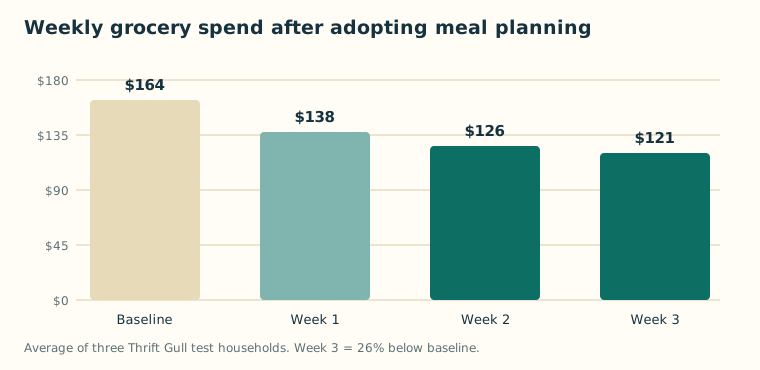
Groceries are the largest truly flexible line in most budgets — you can't halve your rent this month, but you can halve your food waste by Sunday. When we asked three test households to track their food spending for a month before changing anything, the pattern was identical in all three: two large "stock-up" shops a week, three to five small top-up trips, and a bin's worth of wilted produce every Friday. The top-up trips were the killer: each "quick run for dinner" averaged $23, of which $14 was unplanned.
Weekly meal planning attacks all three problems at once. Not the aspirational Pinterest version — a boring, repeatable system built on a fixed meal rotation. It cut our test households' combined grocery bills by 24–28% within three weeks, and held there for the two months we followed up.
The 15-meal rotation
The secret of sustainable meal planning is deciding less, not more. Sit down once and list fifteen dinners your household already eats and mostly likes — the actual rotation, not the ideal one. Fifteen is the sweet spot: enough variety to avoid revolt, few enough that you learn the ingredient lists by heart and can shop them on autopilot.
Sort the fifteen into three buckets:
- Fast (under 25 minutes): the weeknight workhorses — stir-fries, pasta, egg-based dinners, tacos.
- Slow (weekend or batch): curries, stews, traybakes — anything that tolerates reheating and scales to double portions.
- Pantry: meals built entirely from shelf-stable ingredients you always keep — the insurance policy against the 7pm "there's nothing to eat" takeaway.
Each week's plan is simply five picks from the list — three fast, one slow, one pantry — plus one leftover night and one flex night for social plans. Planning a flex night is what makes the system survive contact with real life.
Shop the kitchen before the store
The planning session starts in your cupboards, not on a recipe site. Ten minutes, three steps: check what protein and vegetables need using first, check which pantry staples are running low, then pick meals that consume the first category. This single habit — building the plan around what would otherwise be thrown away — was worth more than any coupon strategy in our test, because the average household binning a bag of salad and half a loaf a week is losing $15–$25 without noticing.
Cook once, eat twice
Double every slow meal and the math changes completely. A doubled curry costs perhaps 40% more in ingredients but produces two dinners, which knocks one cooking session and one top-up risk out of the week. Freeze half flat in bags the day you cook it; a freezer with six labeled portions is a takeaway-replacement fund.
The list rules that hold the line
The plan fails at the store, not at the desk. Four rules kept our households honest:
- Shop once a week, list in hand, after eating. The once-a-week part matters more than the list — every extra trip is an exposure to everything in our grocery store psychology guide.
- Unit-price check on any substitution. Swapping brands is fine; swapping sizes without checking the per-kilo price is how "sales" cost you money.
- One unplanned item maximum. Not zero — zero fails. One keeps the trip human without opening the floodgates.
- Top-ups are produce-only. Midweek milk and greens are allowed; midweek "browse" is not.
What it looks like in practice
Week one feels like admin. By week three, the rotation is memorised, the shop takes forty minutes, and the fridge empties in the right order. Our test households settled at a 24–28% reduction in grocery spending with no reported drop in meal satisfaction — mostly because the money came out of waste and top-up trips, not out of the meals themselves.
If you want a structured on-ramp, meal planning is week two of our 30-day frugal challenge, and the batch-cooking habit pairs well with the utility cuts in our home energy guide — a full oven and a full freezer are both cheaper per portion than half-empty ones.