
Home Guides The 30-Day Frugal Challenge: A Day-by-Day Plan
The 30-Day Frugal Challenge: A Day-by-Day Plan
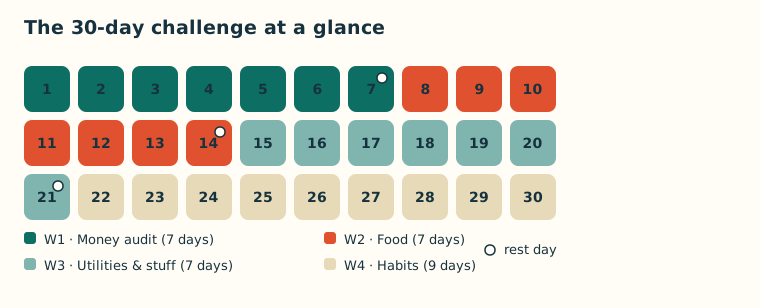
Frugal challenges fail for a predictable reason: they ask for thirty days of willpower instead of thirty days of setup. This one is built differently. Every day is a single small task — most under twenty minutes — and the tasks are ordered so each week builds the next week's infrastructure. By day 30 the savings run automatically, which is the only kind of saving that survives month two.
Realistic outcome for a typical household: $150–$300 freed up monthly, split between cancelled leaks, cheaper habits and recurring cuts that keep paying after the challenge ends. Here's the plan.
Week 1: See the money (days 1–7)
You can't cut what you can't see. Week one is pure audit, no behaviour change required:
- Day 1: Export 90 days of bank and card statements. Just get the data.
- Day 2: Run the full subscription audit. Cancel at least two things.
- Day 3: Categorise last month's spending into ten buckets. Find your three biggest flexible categories.
- Day 4: Set up the two-account structure — bills account and weekly spending account.
- Day 5: Pull your recurring bills (broadband, mobile, insurance) and note contract end dates.
- Day 6: Make one retention call using the cancellation script. Bank the saving.
- Day 7: Rest day. Total the week's found money — the cancelled subscriptions and negotiated bills.
Week 2: Feed yourself cheaper (days 8–14)
Food is the largest flexible category, so it gets a full week, built on our meal planning system:
- Day 8: Write your 15-meal rotation from dinners you already make.
- Day 9: Inventory the pantry, fridge and freezer. Plan five meals around what needs using.
- Day 10: One planned shop, list in hand, after eating. Track the total.
- Day 11: Batch-cook one slow meal, double it, freeze half.
- Day 12: Pack lunch. Calculate what your usual bought lunch costs per month.
- Day 13: Learn unit pricing on three products you buy weekly; switch at least one to the better per-kilo option.
- Day 14: Rest day. Compare this week's food spend to your week-one baseline.
Week 3: Cut the invisible leaks (days 15–21)
Week three is utilities, energy and stuff — details in our home energy guide:
- Day 15: Program the thermostat schedule around your real routine.
- Day 16: Hunt standby loads; put the entertainment cluster on a switched strip.
- Day 17: Cold-wash day. Check your detergent works at 30°C (it does).
- Day 18: Seal the three worst drafts you can find with a damp hand on a windy day.
- Day 19: Run the tariff check: comparison site, actual annual consumption, twenty minutes.
- Day 20: List three unused items for sale at 30–40% of retail, photos in daylight.
- Day 21: Rest day. Note which leaks you've closed and what they were costing.
Week 4: Make it stick (days 22–30)
The final week converts effort into defaults:
- Day 22: Automate a transfer to savings for the day after payday — even $50 counts.
- Day 23: Set the 48-hour rule: anything unplanned over $30 waits two days.
- Day 24: Unsubscribe from every retail marketing email. Sales you never see never tempt you.
- Day 25: Install one cashback portal app for purchases you're already planning.
- Day 26: Plan one free weekend — library, trail, museum free day, cooking project.
- Day 27: Do a no-spend day. Notice which urges were habit, not need.
- Day 28: Put quarterly reminders in the calendar: subscription audit, tariff check, insurance re-quote.
- Day 29: Sell-day follow-up: relist or reprice anything unsold, bank what's sold.
- Day 30: Total it up. Write your own top five habits from the month and schedule next month's version of week one.
The four rules
Whatever days you keep, keep these: audit quarterly, because leaks regrow; automate the savings, because willpower doesn't scale; never shop unplanned or hungry; and rest one day a week, because a frugal system you resent is a frugal system you'll abandon. The goal was never thirty days. It's a household that wastes less by default — the challenge is just the on-ramp.