
Home Guides Cashback Stacking: A 4-Layer System That Works
Cashback Stacking: A 4-Layer System That Works
Cashback has a branding problem. It sounds like pocket change — 1% here, $2 there — because that's how it's usually used: one rebate at a time, redeemed months late, often forgotten entirely. Stacking changes the arithmetic. By combining four independent rebate layers on the same purchase, a careful shopper routinely pulls 8–15% back on planned spending. On $6,000 of annual discretionary purchases, that's $500–$900 a year for roughly an extra minute per checkout.
Here's the system, layer by layer, with the failure modes included — because each layer has one, and they compound too.
Layer 1: The price itself
No rebate rescues a bad price. Before anything else, check the item across two or three retailers and look for an open coupon. Coupons and promo codes sit at the bottom of the stack because they reduce the base that everything else is calculated on — which is exactly why you want them first. A 10%-off code beats a 5% cashback rate every time, and most browser extensions or coupon aggregators will test codes automatically at checkout.
Layer 2: The cashback portal
Portals are affiliate middlemen: click through their link to the retailer, and they share their commission with you — typically 1–10% depending on the store and category. Three rules make portals reliable:
- Click last. Portals track via the most recent referral cookie. If you click a portal link and then open a coupon site or a price-comparison tab, you can overwrite the tracking cookie and get nothing. Do your research first, close the tabs, then click through the portal and buy in that session.
- Disable ad blockers for the trip. Tracking redirects are exactly the kind of thing aggressive blockers eat.
- Screenshot the confirmation. The portal's "your visit was tracked" notice is your evidence if the rebate never posts.
Layer 3: The payment card
Pay with a card that earns on the category — 2% flat cards are the baseline, while rotating-category cards hit 5% in the right quarter. This layer stacks with the portal because they operate on different rails: the portal rebates the click, the card rebates the payment. One caution: some retailers code oddly, so a "5% on department stores" card may see an online marketplace as something else entirely. Test with a small purchase before routing a large one.
Layer 4: Store loyalty and receipts
The final layer is the retailer's own program: loyalty points, member prices and receipt-scanning apps that pay for proof of purchase. These are stackable because they're funded by the retailer and the data brokers, not by the payment network. Individually they're the smallest layer; across a year of grocery and household spending they're worth a surprising amount — see our grocery store psychology piece for why member pricing is designed to feel bigger than it is, and how to take the discount without the nudge.
A worked example
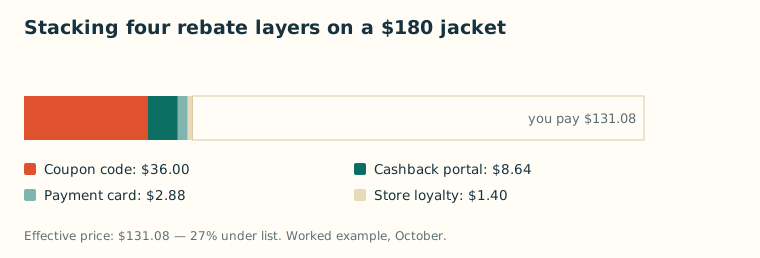
A $180 winter jacket, stacked in October:
- List price $180 → 20% off code found at checkout: $144
- Portal at 6% on $144: $8.64
- Card at 2%: $2.88
- Store loyalty points on the order: ~$1.40
Effective price: $131.08 — 27% under list, with the rebate layers contributing $12.92 on top of the coupon. None of the layers is impressive alone. Together they're a system.
The failure modes
- Chasing rates instead of prices. A 10% portal rate at a store that's 15% more expensive is a loss. Price first, stack second.
- Return clawbacks. Rebates on returned items get reversed, sometimes months later. Don't count stacked savings until the return window closes.
- Gift-card exclusions. Many portals exclude purchases made with gift cards, and many cards exclude gift-card purchases from bonus categories. Mixing the two often zeroes both.
- Letting it change what you buy. The moment a rebate makes you choose the worse product, the system is working on you instead of for you. The stack exists to discount planned spending — the same discipline behind our subscription audit and the booking tactics in our budget travel guide.
Start with one layer — the portal click — and add the rest as they become habit. A four-layer stack you use on every planned purchase beats a perfect system you forget at checkout.